
In today’s competitive education and employment landscape, earning a bachelor’s degree can open the door to a wide range of career opportunities. However, not every student can follow a conventional college schedule. Working professionals, students who have experienced an interruption in their education, and learners looking for flexible academic options may prefer an alternative pathway.
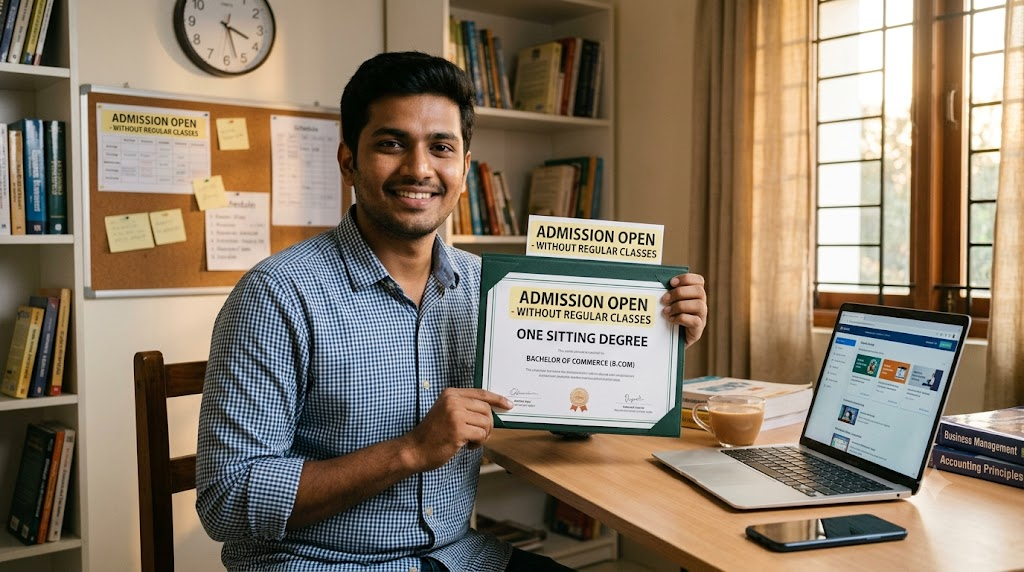
A BCom Fast Track Degree may be an option for eligible learners who want to pursue undergraduate education through an accelerated or flexible study structure. With admissions open for 2026, students can explore available programs and select a course that aligns with their academic and career objectives.
This guide explains what a BCom Fast Track Degree is, who can consider it, the potential benefits, eligibility, admission process, career opportunities, and important factors to check before enrollment.
What Is a BCom Fast Track Degree?
Bachelor of Commerce (BCom) is an undergraduate program focused on commerce, business, accounting, finance, economics, management, and related areas. Depending on the institution, students may study subjects such as financial accounting, business law, economics, taxation, business communication, management, and financial management.
A BCom Fast Track Degree refers to a program or academic pathway designed to provide a more accelerated or flexible route toward completing undergraduate studies, subject to the institution’s academic regulations and applicable recognition requirements.
The exact duration and structure of such programs can vary. Therefore, students should verify the official course details, admission rules, assessment pattern, and recognition status before taking admission.
Why Consider a BCom Fast Track Degree in 2026?
The business and finance sectors continue to create opportunities for graduates with knowledge of commerce and business fundamentals. A BCom can provide a foundation for careers in accounting, banking, finance, taxation, business administration, sales, operations, and related areas.
For learners who need greater flexibility, a fast-track format may help them manage their education alongside employment or other commitments.
Some potential advantages include:
Flexible academic planning
Opportunity to balance education and work
Foundation in commerce and business concepts
Preparation for further education
Development of accounting and analytical skills
Potentially faster progression, depending on the approved program structure
Students should remember that the benefits and duration depend on the specific institution and course.
Who Can Choose a BCom Fast Track Degree?
A fast-track BCom pathway may be suitable for several categories of learners.
Working Professionals
Professionals who are already employed may find it difficult to attend regular college classes. A flexible BCom program can allow them to pursue undergraduate education while continuing their professional responsibilities, depending on the course format.
Students Returning to Education
Learners who had to discontinue their studies due to personal, financial, or professional circumstances may explore flexible degree options to continue their academic journey.
Entrepreneurs and Business Owners
Business owners can benefit from studying subjects related to accounting, finance, taxation, economics, and management. These concepts can provide useful academic knowledge for understanding business operations and financial decision-making.
Career-Oriented Learners
Students who have a clear interest in commerce, banking, accounting, finance, or business may consider BCom as a foundation for their professional journey.
BCom Fast Track Degree Eligibility
Eligibility requirements can differ between institutions. Generally, applicants may need to have completed the required level of secondary education from a recognized board or institution.
Before applying for admission in 2026, students should verify:
Minimum educational qualification
Required subjects, if any
Minimum marks or percentage
Documentation requirements
Admission deadlines
Examination and assessment requirements
Do not assume that eligibility is identical across all BCom programs. Always refer to the official admission information provided by the institution.
BCom Fast Track Admission Process 2026
If you are planning to apply for a BCom Fast Track Degree in 2026, the process may typically involve the following steps:
1. Research the Program
Start by understanding the university or institution offering the course. Review the curriculum, duration, learning mode, eligibility criteria, and academic structure.
2. Verify Recognition
Recognition is one of the most important factors when selecting any degree program. Confirm that the degree is awarded by an appropriate recognized institution and that it meets the requirements for your intended career or higher education.
3. Complete the Application
Fill out the admission application with accurate academic and personal information. Make sure all required documents are submitted according to the institution’s instructions.
4. Submit Documents
Applicants may be asked to provide educational certificates, identity documents, photographs, and other relevant records.
5. Complete the Admission Formalities
After eligibility verification and acceptance, complete the applicable fee payment and enrollment procedures.
Since admission rules can change, students should check the latest official information for the 2026 admission cycle before applying.
What Will You Study in a BCom Program?
The curriculum varies by institution and specialization, but BCom students commonly encounter subjects from areas such as:
Financial Accounting
Business Economics
Business Law
Corporate Accounting
Taxation
Financial Management
Business Communication
Cost Accounting
Marketing
Human Resource Management
Entrepreneurship
Business Statistics
These subjects can help students develop a broad understanding of how businesses operate and how financial and commercial decisions are made.
Career Opportunities After BCom
A BCom degree can provide a foundation for various career paths. Depending on their skills, specialization, experience, and additional qualifications, graduates may explore roles such as:
Accountant: Graduates can pursue entry-level accounting positions involving financial records, invoices, bookkeeping, and reporting.
Banking Professional: BCom graduates may explore opportunities in banking and financial services, subject to employer requirements.
Finance Executive: Businesses across industries require professionals to support budgeting, financial analysis, reporting, and related functions.
Taxation Executive: Students interested in taxation can build careers in tax-related support and compliance roles after developing the required knowledge and skills.
Business Development Executive: Strong communication and commercial understanding can help graduates explore sales and business development opportunities.
Administrative Roles: A BCom qualification can also support careers in business administration, operations, and office management.
Additional professional qualifications and practical experience can further expand career opportunities.
Higher Studies After BCom
A BCom does not necessarily have to be the end of your academic journey. Graduates can consider postgraduate education or professional qualifications based on their interests and eligibility.
Potential options may include:
Master of Commerce (MCom)
Master of Business Administration (MBA)
Finance-related postgraduate programs
Accounting and taxation courses
Banking and financial services certifications
Professional commerce and accounting qualifications
Before choosing a higher-education pathway, check the admission requirements of the institution or professional body concerned.
Important Things to Check Before Admission
While the idea of completing a degree through a fast-track route may sound attractive, students should conduct proper research before enrolling.
Verify Degree Recognition
Confirm who awards the degree and whether the qualification is recognized by the relevant authorities.
Understand the Duration
Ask exactly how the accelerated structure works and whether the advertised completion period applies to your academic circumstances.
Review the Curriculum
Compare the syllabus with your career objectives. A strong curriculum should provide relevant knowledge rather than focusing only on completing the qualification quickly.
Check Examination Requirements
Understand how examinations, assignments, attendance, practical components, and other assessments are handled.
Ask About Future Eligibility
If you plan to pursue government examinations, postgraduate studies, professional qualifications, or a particular job, check whether the degree meets the relevant eligibility requirements.
Final Thoughts
A BCom Fast Track Degree in 2026 can be an appealing option for eligible learners seeking a flexible or accelerated route to undergraduate education. It may be particularly relevant for working professionals, entrepreneurs, students returning to education, and career-focused learners interested in commerce and business.
However, choosing a degree should never be based on speed alone. Recognition, academic quality, eligibility, curriculum, assessment methods, and future career or higher-education requirements should all be considered before admission.
If BCom Fast Track Degree admissions are open for 2026, prospective students should carefully review the official program information, verify all eligibility requirements, and understand the academic structure before submitting an application. A well-researched choice can help you build a strong educational foundation for your future career.




Write a comment ...