
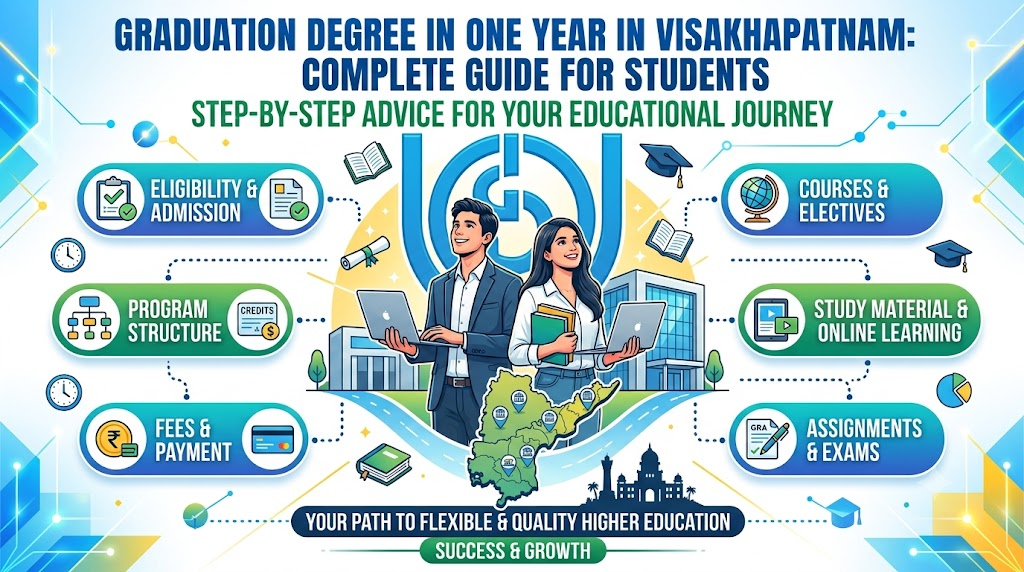
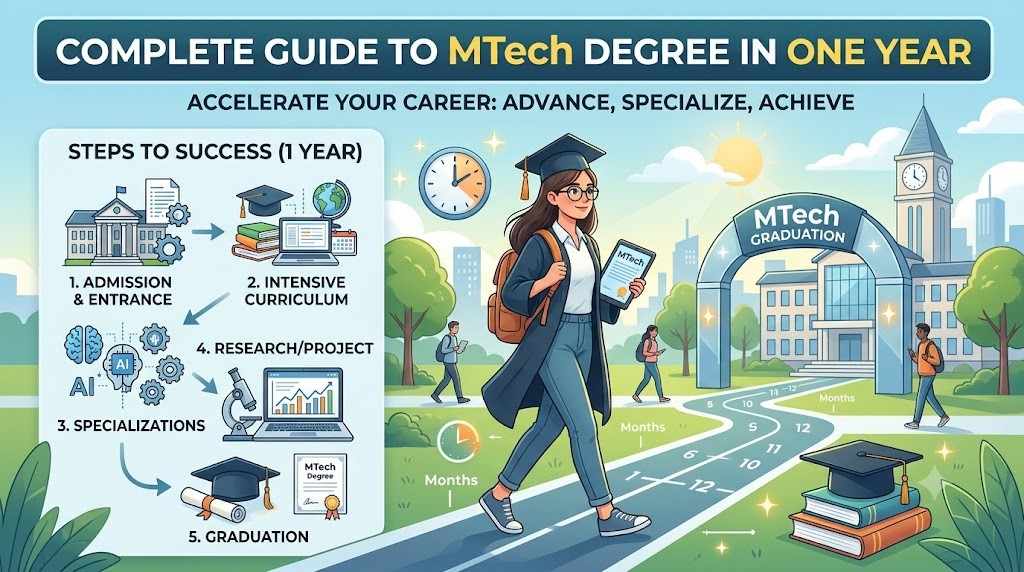
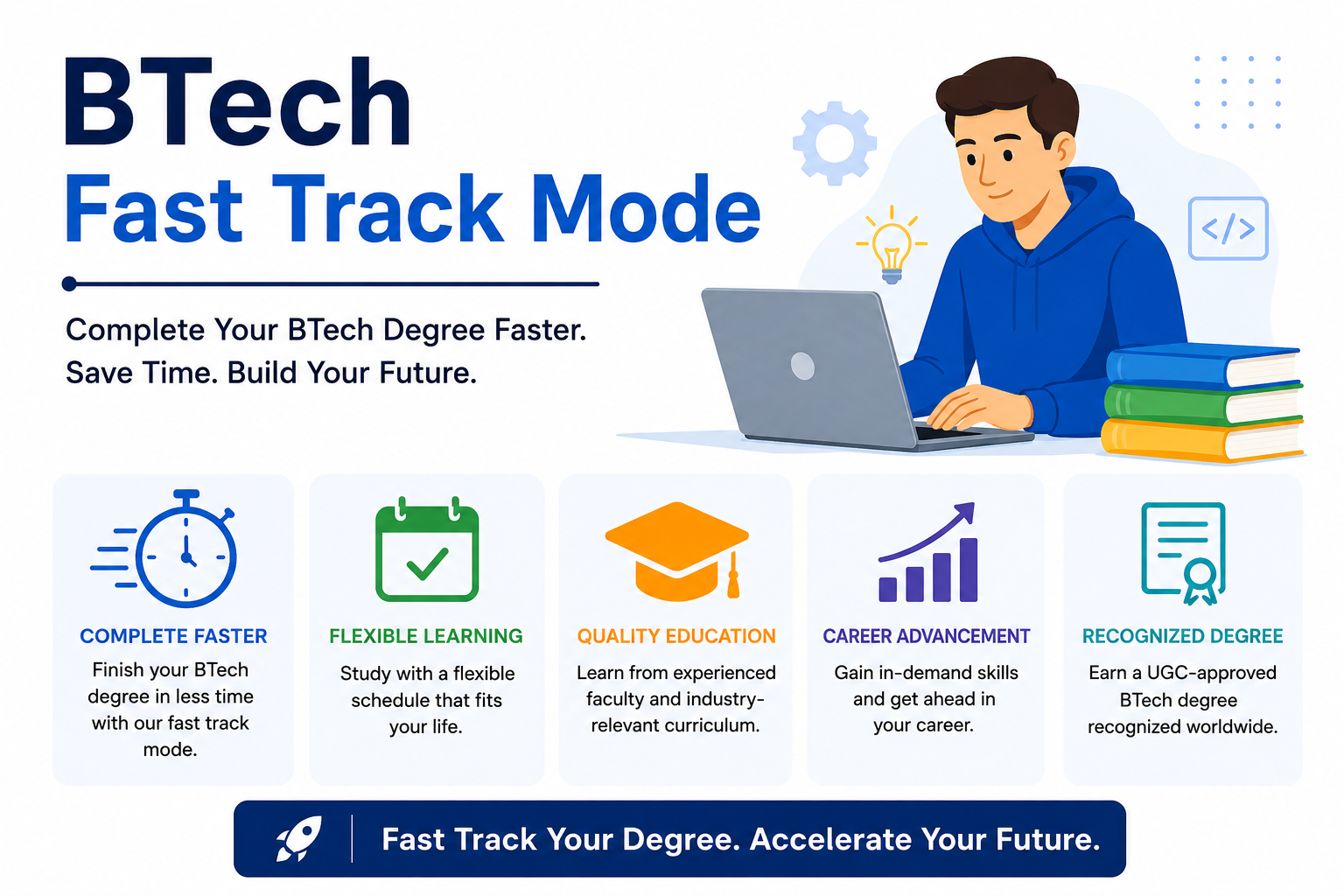
In today’s fast-paced world, education has evolved to match the needs of learners who want flexibility, speed, and career advancement without putting their lives on hold. One of the most talked-about trends in higher education is the concept of completing a degree in one year. Programs like BA, BCom, MBA, MCA, MA, and MCom are now being explored through fast-track, distance learning, and credit-transfer pathways.
But what does it really mean to complete a degree in one year? Is it legitimate? Who should consider it? Let’s break it down.
What Are One-Year Degree Programs?
A one-year degree program is not always a traditional full course compressed into 12 months. Instead, it usually involves one of the following:
Credit Transfer Programs: Students transfer credits from previous incomplete education.
Lateral Entry Schemes: Diploma holders or experienced professionals join directly into advanced semesters.
Fast-Track Learning: Accelerated courses designed for working professionals.
Distance or Online Education: Flexible learning formats that allow quicker completion.
These pathways allow students to earn a recognized qualification in a shorter duration, especially if they already have prior academic or professional experience.
Popular One-Year Degree Options
1. Bachelor of Arts (BA)
A one-year BA program is ideal for students who started but couldn’t complete their graduation. With credit transfer, they can finish their degree quickly in fields like humanities, social sciences, or languages.
2. Bachelor of Commerce (BCom)
Perfect for commerce students or professionals working in accounting, finance, or business. A fast-track BCom helps strengthen foundational knowledge and improve job prospects.
3. Master of Business Administration (MBA)
One-year MBA programs are highly popular among working professionals. These programs focus on leadership, strategy, and management skills, often requiring prior work experience.
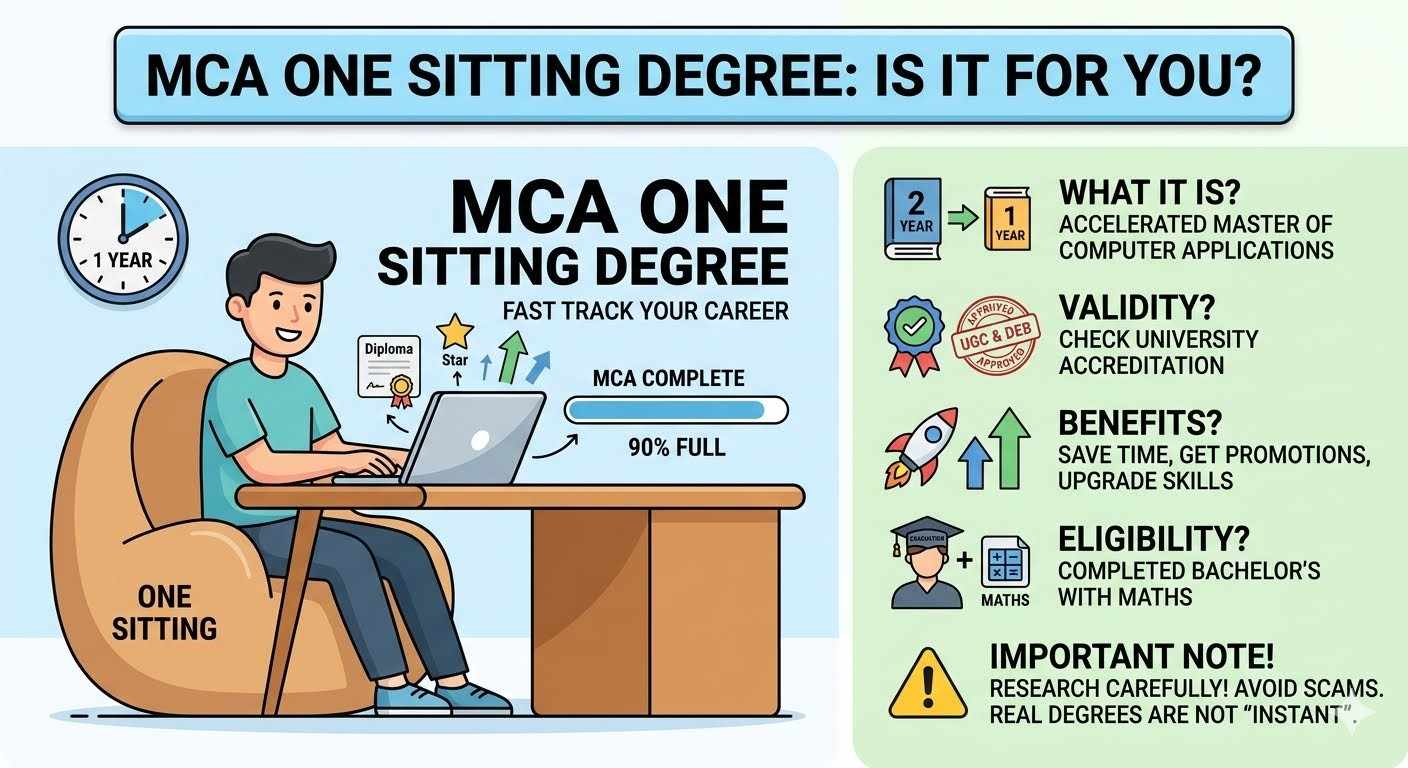
4. Master of Computer Applications (MCA)
For IT professionals, a one-year MCA can enhance technical skills in software development, programming, and systems management—especially if they already hold a related qualification.
5. Master of Arts (MA)
Students interested in literature, sociology, political science, or psychology can complete an MA quickly through distance or accelerated modes.
6. Master of Commerce (MCom)
Ideal for commerce graduates, a one-year MCom helps deepen expertise in finance, taxation, and business analytics.
Who Should Consider a One-Year Degree?
One-year degree programs are not for everyone. They are best suited for:
Working professionals who want career growth without leaving their jobs
Students with incomplete education looking to finish their degrees
Diploma holders aiming for higher qualifications
Entrepreneurs seeking formal education to support their business knowledge
Individuals needing quick qualifications for promotions or job changes
Benefits of Completing a Degree in One Year
1. Time-Saving
The biggest advantage is obvious—you save years of study and enter the workforce or advance your career faster.
2. Cost-Effective
Shorter programs often reduce tuition fees, accommodation costs, and other expenses.
3. Flexible Learning
Most one-year programs are offered online or via distance education, making them accessible from anywhere.
4. Career Advancement
A completed degree can open doors to promotions, higher salaries, and better job roles.
5. Skill Enhancement
Programs are often focused and industry-relevant, helping you gain practical knowledge quickly.
Important Things to Check Before Enrolling
While the idea of a one-year degree is attractive, it’s crucial to ensure legitimacy and quality.
1. Accreditation
Always verify that the university or institution is recognized by relevant authorities. A valid degree holds value in the job market.
2. Eligibility Criteria
Many programs require prior education, work experience, or incomplete coursework.
3. Mode of Study
Choose between online, distance, or hybrid learning based on your schedule and learning preference.
4. Curriculum Quality
Check if the course content is updated and aligned with industry standards.
5. Career Support
Some institutions offer placement assistance, internships, or career counseling.
Myths vs Reality
Myth: One-year degrees are fake or invalid.
Reality: Legitimate fast-track and credit-based programs exist, but you must choose recognized institutions.
Myth: These programs are too easy.
Reality: They are intensive and require dedication, especially in a shorter timeframe.
Myth: Employers don’t accept them.
Reality: Employers value accredited degrees and skills, regardless of duration.
Career Opportunities After One-Year Degrees
Graduates of these programs can explore opportunities in various sectors:
BA/MA: Teaching, content writing, public relations, civil services
BCom/MCom: Accounting, banking, finance, taxation
MBA: Management roles, consulting, marketing, HR
MCA: IT, software development, data analysis
The key is to combine your degree with practical skills and experience.
Final Thoughts
Completing a degree in one year is an excellent opportunity for those who want to save time and accelerate their careers. However, it requires careful planning, choosing the right institution, and a commitment to learning.
If you have unfinished education or want to upgrade your qualifications quickly, one-year degree programs can be a smart and practical solution. Just ensure you do your research, verify accreditation, and align the program with your long-term career goals.
In a world where time is valuable and skills matter more than ever, fast-track education is not just a trend—it’s a powerful pathway to success.









Write a comment ...