
An MTech (Master of Technology) degree is one of the most respected postgraduate qualifications for engineering graduates who want to enhance their technical expertise, qualify for leadership roles, and improve their career prospects. With rapid technological advancements and increasing competition in the job market, many professionals seek flexible learning options that allow them to continue working while upgrading their qualifications.
This has led to growing interest in the concept of an MTech Degree in One Year. Many students and working professionals search for accelerated engineering programs that promise faster completion. However, before enrolling, it is essential to understand the eligibility, admission process, validity, fees, and career opportunities associated with such programs.
In this comprehensive guide, we'll explain everything you need to know about pursuing an MTech degree, discuss whether one-year programs are recognized, and help you choose the right path for your academic and professional goals.
What Is an MTech Degree?
An MTech (Master of Technology) is a postgraduate engineering degree designed for students who have completed a bachelor's degree in engineering or technology.
The program focuses on:
Advanced technical knowledge
Engineering research
Innovation and development
Industry-specific specialization
Practical applications
Project management
Technical leadership
An MTech qualification helps engineers gain specialized expertise that can open doors to higher-paying jobs and research opportunities.
What Is a One-Year MTech Degree?
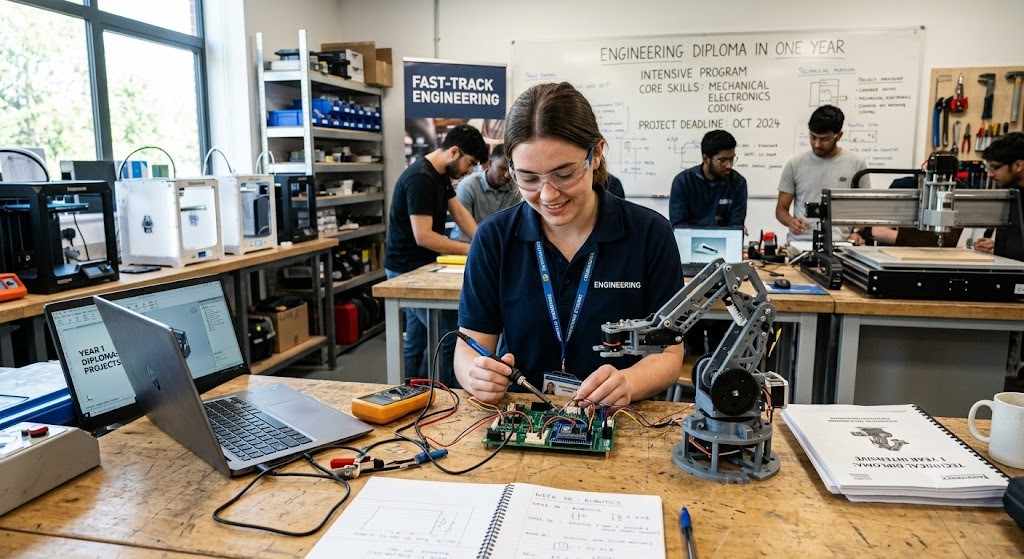
A One-Year MTech Degree generally refers to an accelerated postgraduate engineering program marketed toward working professionals or experienced engineers.
Many people believe that they can complete an MTech in just one year instead of the conventional duration. However, prospective students should carefully verify the structure, recognition, and regulatory status of any such program before enrolling.
Always confirm the following:
Whether the university is recognized.
Whether the program complies with applicable higher education regulations.
Whether the qualification will be accepted for your intended career goals, such as higher studies, government employment, or licensing, where applicable.
Never rely solely on promotional claims.
Is an MTech Degree in One Year Valid in India?
This is one of the most frequently asked questions.
Students should understand that the validity of any engineering qualification depends on the university, the mode of study, and compliance with the relevant regulatory framework.
Before taking admission, verify:
University recognition
Program approval status (where applicable)
Degree acceptance for employment
Recognition for higher education
Industry acceptance
If a program claims to award an MTech in one year, ask the institution to provide official documentation explaining the basis for the program and its recognition.
Doing proper research before admission can prevent future academic and career complications.
Who Can Apply for an MTech Program?
Eligibility requirements vary by university, but common requirements include:
Bachelor's degree in Engineering (BE/BTech)
Bachelor's degree in Technology from a recognized institution
Minimum qualifying marks as prescribed by the university
Relevant work experience (for some professional programs)
Required entrance examination, if applicable
Some institutions also consider experienced professionals for specialized executive or industry-oriented postgraduate programs.
Admission Process
The admission process generally involves the following steps:
Step 1: Choose Your Specialization
Select a specialization aligned with your career goals.
Popular options include:
Computer Science Engineering
Artificial Intelligence
Data Science
Civil Engineering
Mechanical Engineering
Electrical Engineering
Electronics & Communication
Information Technology
Structural Engineering
Environmental Engineering
Robotics
Cyber Security
Machine Learning
Power Systems
Step 2: Verify University Recognition
Before applying, carefully verify:
University accreditation
Recognition status
Course curriculum
Faculty
Industry collaborations
Placement support
Step 3: Submit Application
Complete the online or offline application form.
Step 4: Upload Documents
Typical documents include:
Graduation mark sheets
Degree certificate
Identity proof
Passport-size photographs
Address proof
Work experience certificate (if required)
Step 5: Pay Admission Fees
Most universities allow secure online fee payment.
Step 6: Confirmation
After document verification and fee payment, eligible candidates receive admission confirmation.
Documents Required
Students usually need:
Class 10 certificate
Class 12 certificate
BE/BTech mark sheets
Graduation certificate
Government ID proof
Passport-size photographs
Aadhaar Card
Work experience certificate (if applicable)
Migration certificate (if required)
Popular MTech Specializations
Choosing the right specialization is one of the most important decisions.
Computer Science Engineering
Ideal for careers in software development, AI, cloud computing, and cybersecurity.
Artificial Intelligence
Focuses on intelligent systems, machine learning, and automation.
Data Science
Covers analytics, big data, predictive modeling, and business intelligence.
Mechanical Engineering
Suitable for manufacturing, automotive, robotics, and industrial design.
Civil Engineering
Prepares graduates for infrastructure, construction, transportation, and structural engineering.
Electrical Engineering
Specializes in power systems, renewable energy, and electrical design.
Electronics & Communication
Offers opportunities in telecommunications, embedded systems, VLSI, and IoT.
Information Technology
Focuses on software systems, networking, databases, and enterprise technology.
Skills You Gain
An MTech program develops valuable technical and professional skills, including:
Advanced engineering concepts
Technical problem-solving
Research methodology
Project planning
Innovation
Data analysis
Programming skills
Technical documentation
Leadership
Team management
Communication
Analytical thinking
These skills are highly valued across industries.
Benefits of Pursuing an MTech
Some of the major advantages include:
Advanced Technical Knowledge
Students gain deeper expertise beyond undergraduate engineering studies.
Better Career Opportunities
Many organizations prefer postgraduate engineers for specialized technical roles.
Higher Salary Potential
Advanced qualifications may improve earning potential depending on experience, skills, employer, and industry.
Research Opportunities
Graduates can contribute to innovation and research projects.
Leadership Roles
An MTech can support progression into technical leadership and project management positions.
Industry Recognition
Specialized knowledge can strengthen professional credibility.
MTech Fees
The fee structure depends on several factors, including:
University
Program type
Specialization
Study mode
Location
Private institutions generally charge higher fees than public institutions, but the actual amount varies widely.
Students should also consider:
Registration fees
Examination fees
Project fees
Learning material costs
Alumni fees (if applicable)
Compare the complete cost before making a decision.
Career Scope After MTech
An MTech opens opportunities across numerous sectors.
Popular industries include:
Information Technology
Manufacturing
Construction
Power
Energy
Telecommunications
Artificial Intelligence
Aerospace
Automobile
Semiconductor Industry
Government Organizations
Research Institutions
Consulting
Job Roles
Graduates may pursue roles such as:
Software Engineer
Data Scientist
AI Engineer
Machine Learning Engineer
Research Engineer
Design Engineer
Project Engineer
System Architect
Structural Engineer
Electrical Design Engineer
Automation Engineer
Robotics Engineer
Network Engineer
Technical Consultant
Product Development Engineer
The exact opportunities depend on the specialization, experience, and employer requirements.
Salary After MTech
Salary varies significantly based on:
Experience
Technical skills
Company
Industry
Location
Specialization
Fresh graduates often begin with competitive compensation, while experienced professionals with advanced expertise can command substantially higher salaries over time.
Who Should Pursue an MTech?
An MTech may be suitable for:
Engineering graduates
Working professionals
Technical consultants
Research enthusiasts
Software engineers
Manufacturing engineers
Government job aspirants (subject to recruitment rules)
Professionals seeking career advancement
Tips for Choosing the Right Program
Before taking admission, consider the following:
Verify university recognition.
Review the curriculum.
Compare specializations.
Check faculty qualifications.
Understand placement support.
Confirm industry relevance.
Read student reviews from reliable sources.
Review the total fee structure.
Ensure the program aligns with your long-term career goals.
Common FAQs
Can I complete an MTech in one year?
Some institutions advertise accelerated postgraduate engineering programs. Before enrolling, carefully verify the program's recognition, structure, and acceptance for your intended career goals.
Is work experience required?
Not always. Some professional or executive-oriented programs may require relevant work experience, while others admit eligible engineering graduates directly.
Which specialization has the best career scope?
Specializations such as Artificial Intelligence, Computer Science, Data Science, Cyber Security, and Electronics are currently in high demand. The best choice depends on your interests and career plans.
Can working professionals pursue MTech?
Yes. Many universities offer flexible postgraduate engineering programs designed for working professionals through weekend, hybrid, or executive formats.
Is MTech better than MBA?
An MTech is ideal for professionals who want to deepen their technical expertise, while an MBA is better suited to those aiming for management and business leadership roles.
Conclusion
An MTech is an excellent choice for engineers who want to build specialized knowledge, strengthen their technical skills, and advance their careers. Although many learners are interested in the idea of an MTech Degree in One Year, it is important to make decisions based on verified information rather than marketing claims.
Before enrolling, always confirm the university's recognition, understand the program structure, review admission requirements, compare fees, and evaluate how the qualification aligns with your career objectives. A well-chosen postgraduate program can improve your expertise, expand your professional opportunities, and support long-term career growth.
Whether you are a recent engineering graduate or a working professional, investing in a quality MTech program from a recognized institution can be a valuable step toward achieving your academic and professional aspirations.











Write a comment ...