
In today's competitive job market, having a bachelor's degree can open doors to better career opportunities, higher education, and government job eligibility. Many working professionals and individuals who had to discontinue their studies search for a One Sitting Degree as a way to complete their graduation.
If you're planning to pursue a one sitting degree in 2026, it's important to understand what the term means, how admissions work, and how to verify that your chosen university and program are recognized.
This guide explains the process, eligibility, required documents, fees, and important precautions before applying.
What Is a One Sitting Degree?
The term One Sitting Degree is commonly used by education consultants to describe accelerated or degree-completion pathways for students who have educational gaps or incomplete studies.
However, it is important to know that "One Sitting Degree" is not an official academic category recognized by the University Grants Commission (UGC). Universities award degrees according to their approved academic regulations and program structures. Before enrolling, students should verify the university's recognition and the legitimacy of the program they are considering.
Who Can Pursue a One Sitting Degree?
Students who typically explore these programs include:
Working professionals
Business owners
Students who discontinued college
Individuals returning to education after several years
Candidates seeking graduation for career advancement
Aspirants preparing for competitive or government examinations
Eligibility depends on the university's admission rules and the specific program.
Step 1: Define Your Academic Goal
Before applying, decide why you need the degree.
Your goal could be:
Applying for government jobs
Getting promoted at work
Pursuing higher education
Improving career prospects
Meeting eligibility requirements for professional opportunities
Having a clear objective will help you choose the right program.
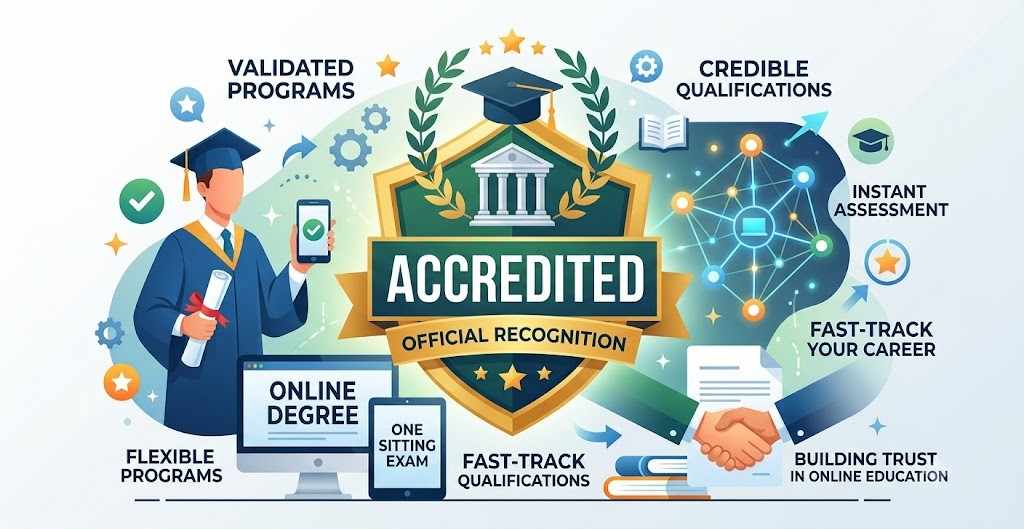
Step 2: Choose a Recognized University
This is the most important step.
Always verify that the university is recognized by the University Grants Commission (UGC). If you are considering online or distance learning, check whether the program is offered in accordance with applicable UGC regulations.
Never rely solely on advertisements or claims made by education consultants. Visit the university's official website and confirm recognition before paying any fees.
Step 3: Check Eligibility
Different universities may have different admission requirements.
Generally, undergraduate applicants need:
Class 10 certificate
Class 12 certificate or equivalent
Valid government-issued ID
Passport-size photographs
Students with previous college education may also need to submit academic transcripts or transfer-related documents if applicable.
Step 4: Select the Right Course
Choose a course that aligns with your career goals.
Popular options include:
Bachelor of Arts (BA)
Bachelor of Commerce (B.Com)
Bachelor of Business Administration (BBA)
Bachelor of Computer Applications (BCA)
Bachelor of Science (B.Sc.)
Master of Business Administration (MBA)
Master of Commerce (M.Com)
Review the curriculum, duration, and eligibility before applying.
Step 5: Gather Required Documents
Most universities ask applicants to submit:
Class 10 marksheet
Class 12 marksheet
Aadhaar Card or another government ID
Passport-size photographs
Address proof
Transfer Certificate (if required)
Migration Certificate (if applicable)
Previous college records (where relevant)
Keep scanned copies ready if applying online.
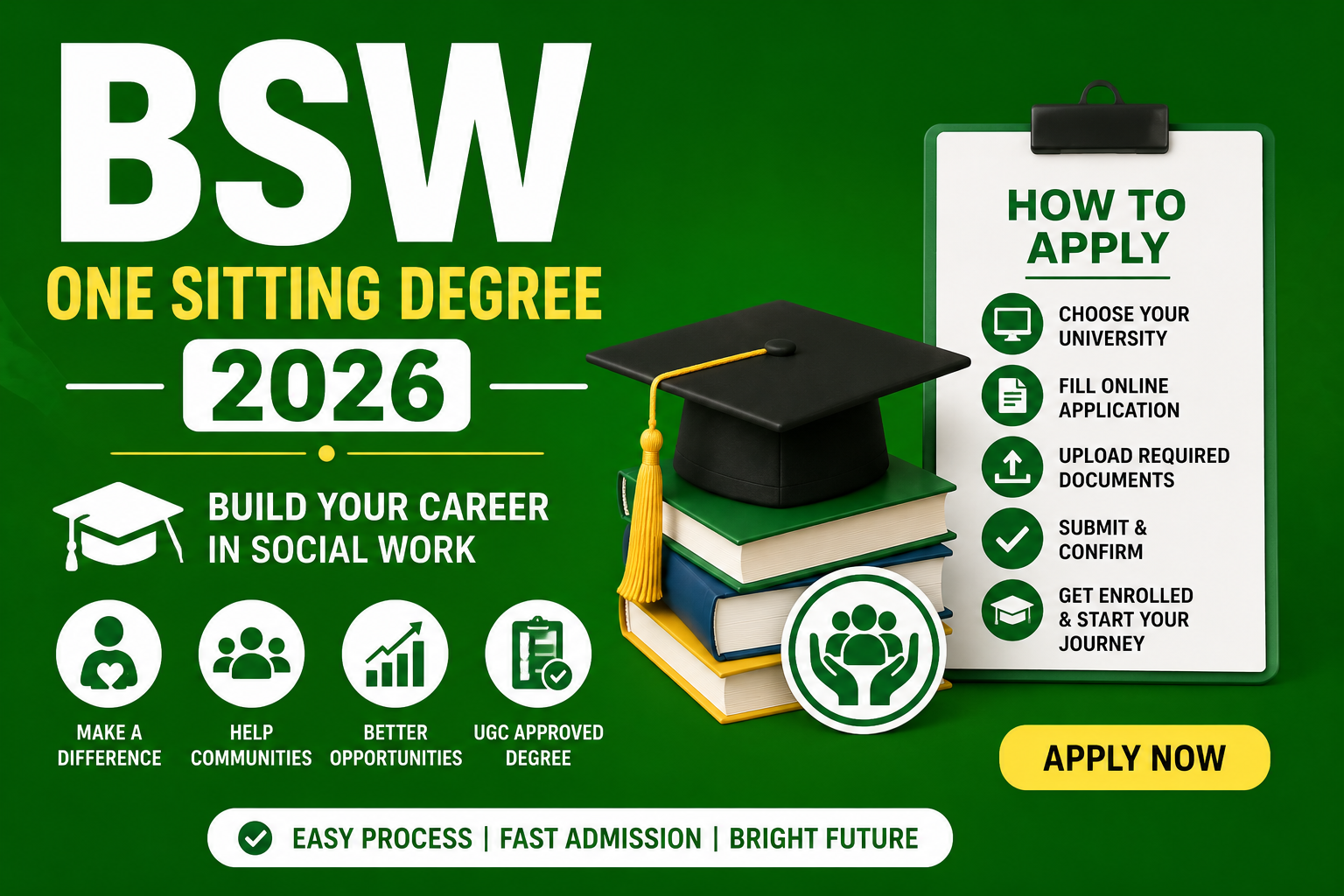
Step 6: Complete the Admission Process
The admission process generally includes:
Filling out the application form
Uploading the required documents
Paying the admission fee
Document verification
Receiving admission confirmation from the university
Read all admission instructions carefully before submitting your application.
Step 7: Understand the Fee Structure
Fees vary depending on the university and course.
Approximate ranges are:
BA: ₹10,000–₹50,000
B.Com: ₹12,000–₹70,000
BBA: ₹15,000–₹80,000
BCA: ₹40,000–₹80,000
MBA: ₹25,000–₹1,50,000
Always confirm the official fee structure directly with the university.
Step 8: Verify Recognition Before Enrollment
Before making any payment, verify:
UGC recognition of the university
Recognition of the specific program, where applicable
Official admission notifications
Fee payment methods
Student support services
Never trust institutions promising "degree in one day" or "100% guaranteed degree without study." Such claims should be treated with caution.
Advantages of Pursuing a Degree Through Flexible Learning
Students often choose flexible learning pathways because they offer:
Career Advancement
Graduation may help candidates qualify for promotions and managerial positions.
Higher Education
A bachelor's degree is generally required for postgraduate programs such as MBA, MA, M.Com, and MCA, subject to the admitting institution's eligibility criteria.
Flexible Schedule
Working professionals can often balance education with their jobs.
Affordable Education
Distance and online learning programs are frequently more economical than traditional classroom education.
Skill Development
Many programs help students strengthen communication, management, analytical, and professional skills.
Common Mistakes to Avoid
Many students make avoidable mistakes during admission.
Avoid the following:
Enrolling without verifying university recognition
Paying fees to unauthorized agents
Ignoring admission guidelines
Believing unrealistic advertisements
Not keeping copies of payment receipts and admission documents
Failing to understand the university's examination and academic requirements
Careful planning can help prevent future issues.
Career Opportunities After Graduation
A recognized bachelor's degree can support opportunities in:
Banking
Insurance
Information Technology
Sales and Marketing
Human Resources
Customer Service
Retail Management
Government recruitment (subject to recruitment rules)
Business Administration
Entrepreneurship
Career outcomes depend on the recognition of the qualification, the employer's requirements, and the individual's skills and experience.
Frequently Asked Questions
Is a one sitting degree legal in India?
The phrase "one sitting degree" is not an official academic category. The validity of any degree depends on whether it is awarded by a recognized university in accordance with applicable regulations.
Can I apply for government jobs?
Government recruitment authorities specify eligibility in each notification. Candidates should ensure their degree meets the stated requirements.
Can I pursue higher education after graduation?
Many postgraduate programs require a recognized bachelor's degree. Admission depends on the policies of the institution offering the course.
Is online admission available?
Many universities offer online admission for eligible programs. Applicants should use the university's official admission portal.
Final Thoughts
Pursuing a one sitting degree in 2026 requires careful research and informed decision-making. Rather than focusing on marketing terms, students should prioritize enrolling in a recognized university and selecting a program that complies with applicable academic regulations.
Before applying, verify the university's recognition, understand the admission process, review eligibility requirements, and confirm all fee details through official sources. A legitimate bachelor's degree can support career advancement, professional growth, and future educational opportunities, making it a valuable long-term investment in your future.
https://taggedface.com/blogs/82140/A-Complete-Guide-to-One-Sitting-Degree-Programs-in-India
https://globhy.com/blog/one-sitting-degree-for-government-jobs-what-you-should-know-2026







Write a comment ...